
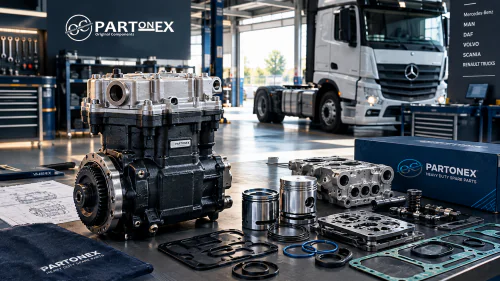
Heavy-Duty Air Compressors: How They Work, Common Faults and Choosing the Right Spare Parts
Heavy-duty air compressors are essential components in trucks, tractor units, buses and other commercial vehicles. They supply compressed air to pneumatic systems, particularly air brake systems, making their correct operation important for vehicle safety, reliability and operating efficiency.
Partonex highlights the importance of selecting the right heavy-duty spare parts and ensuring compatibility with the vehicle. When sourcing air compressors and compressor spare parts for Mercedes-Benz, MAN, DAF, Volvo, Scania, Renault Trucks and other commercial vehicle brands, accurate part identification is essential.
How does a heavy-duty air compressor work? What are the common air compressor faults? Which components should be checked when a compressor fails to build pressure or carries excessive oil? This guide explains the key points in clear, practical language.
What Is a Heavy-Duty Air Compressor?
A heavy-duty air compressor is a mechanical unit that uses engine power to draw in atmospheric air, compress it and supply it to the vehicle's compressed air system.
The compressed air is primarily used by the air brake system. Depending on the vehicle design, it may also support suspension systems, gear-shifting mechanisms and other pneumatic equipment.
The main functions of a truck air compressor include:
-
Producing compressed air for the air brake system.
-
Helping air reservoirs reach the required pressure.
-
Supporting the operation of pneumatic vehicle systems.
-
Working with pressure-control components to maintain the system within its specified operating range.
Insufficient air delivery or an inability to maintain pressure can affect vehicle operation. For this reason, air compressor maintenance and accurate fault diagnosis are important parts of heavy-duty vehicle servicing.
How Does a Truck Air Compressor Work?
Heavy-duty air compressors are generally driven by the vehicle's engine. In a typical piston-type compressor, a piston moves inside a cylinder to compress air and deliver it through the outlet valves.
The process generally involves the following stages:
1. Air intake: The compressor draws air through its intake system.
2. Compression: The piston reduces the available cylinder volume, increasing the air pressure.
3. Air delivery: Compressed air passes through the valves into the compressor outlet and air preparation system.
4. Air reservoir charging: The compressed air fills the vehicle's air reservoirs according to system demand.
5. Pressure control: The pressure regulator and compressor unloading mechanism control compressor operation when the required pressure is reached.
The air dryer, regulator, valves, connecting lines and air reservoirs also play important roles in maintaining the performance of the entire pneumatic system.
Types of Heavy-Duty Air Compressors
Commercial vehicle manufacturers use different compressor designs depending on engine configuration, vehicle requirements and compressed air demand.
Single-cylinder air compressors
Single-cylinder compressors are used in applications where their design and output meet the vehicle's requirements. Capacity should not be assessed by cylinder count alone. Engine speed, displacement, operating conditions and manufacturer specifications must also be considered.
Twin-cylinder air compressors
Twin-cylinder compressors can provide greater air delivery capacity in suitable applications. They may be used where the pneumatic system requires a higher volume of compressed air.
However, a twin-cylinder compressor should not automatically be considered a direct replacement for a single-cylinder unit. Mounting points, drive configuration, lubrication, cooling, pressure capacity and vehicle manufacturer requirements must all be checked.
Choosing a compatible air compressor
When selecting a compressor for Mercedes-Benz Actros and Arocs, MAN, DAF, Volvo, Scania or Renault Trucks vehicles, the vehicle brand alone may not be enough to identify the correct part.
Before purchasing a heavy-duty air compressor, check:
-
OEM number and alternative part numbers.
-
Vehicle model, production year and engine type.
-
Mounting points and drive connections.
-
Cylinder configuration and technical capacity.
-
Lubrication and cooling arrangements.
-
Manufacturer compatibility information.
Choosing the correct truck air compressor helps reduce the risk of incorrect fitment, unnecessary replacement costs and compatibility problems.
Common Heavy-Duty Air Compressor Problems
Air compressor faults can present themselves in different ways. However, not every pressure problem is caused by a defective compressor. Air leaks, air dryer faults, regulator issues and damaged connections can produce similar symptoms.
1. Air compressor not building pressure
A compressor that cannot produce sufficient pressure is a serious concern in a heavy-duty vehicle.
Possible causes include:
-
Worn piston rings.
-
Damaged intake or discharge valves.
-
Faulty valve plates or gaskets.
-
Cylinder bore wear.
-
Compressor drive mechanism problems.
-
Leaks in the compressed air system.
Replacing the complete compressor without identifying the root cause can create unnecessary expense. Air delivery and the system's ability to maintain pressure should be checked first.
2. Excessive oil carryover
Excessive oil entering the compressed air system may be associated with internal compressor wear. Piston rings, cylinder surfaces and the lubrication system should be inspected.
However, oil carryover is not always caused by the compressor alone. Crankcase pressure, oil return conditions and engine operating characteristics may also need investigation.
Excessive oil can contaminate the air dryer and other pneumatic components. Early diagnosis helps prevent further problems.
3. Slow air pressure build-up
Air reservoirs taking longer than normal to fill may indicate:
-
Reduced compressor output.
-
Leaks in air lines.
-
Restricted air intake.
-
Malfunctioning compressor valves.
-
Air dryer or pressure regulator problems.
The pressure build-up time should be measured and compared with the vehicle manufacturer's specifications.
4. Unusual compressor noise
Metallic noises, knocking or increased vibration may indicate problems involving bearings, the crankshaft, pistons, connecting rods or drive components.
These symptoms should not be ignored. If the noise increases or mechanical damage or lubrication problems are suspected, the compressor and vehicle should be inspected according to the appropriate service procedures.
5. Compressor running continuously
A compressor that does not unload as expected may be affected by air leaks, excessive air consumption, regulator faults or a problem with the unloading mechanism.
Replacing the compressor alone may not solve the problem. The entire air circuit and pressure-control system should be inspected.
Heavy-Duty Air Compressor Spare Parts
The parts used in heavy-duty air compressors vary according to the compressor design and manufacturer. Identifying the correct replacement component is essential for a successful repair.
Compressor cylinder head
The cylinder head houses important parts of the compression and valve assembly. Cracks, deformation or damage to the air passages can affect compressor performance.
Compressor valve plate
The valve plate helps control air intake and the discharge of compressed air. Worn or damaged valves can reduce air delivery and overall compressor efficiency.
Compressor pistons and piston rings
Pistons and piston rings are fundamental to the compression process. Wear can cause pressure loss, reduced performance and, in some cases, excessive oil carryover.
Compressor gaskets and repair kits
Gasket sets and compressor repair kits can help restore sealing or replace worn components when the remaining compressor parts are within acceptable service limits.
However, replacing a gasket or repair kit is not sufficient for every fault. The cylinder, crank mechanism and other components must also be assessed.
Compressor crankshaft and drive components
The crankshaft and drive mechanism transfer motion from the engine to the compressor. Wear, excessive clearance or damage in this area can cause mechanical noise, vibration and operating problems.
When searching for air compressor spare parts through Partonex, comparing OEM reference numbers can help identify the correct product.
How to Extend the Service Life of a Truck Air Compressor
Regular maintenance and accurate fault diagnosis are essential for reliable compressor operation.
Inspect the air intake. A blocked air filter or restricted intake line can negatively affect compressor efficiency.
Maintain the air dryer. Replace or service the air dryer cartridge according to the vehicle manufacturer's maintenance schedule. Proper air treatment helps limit moisture and contamination in the pneumatic system.
Repair air leaks. Leaking hoses, connections and valves can force the compressor to work harder than necessary. Inspect the entire air circuit.
Monitor lubrication. Check the lubrication arrangement, oil return conditions and related components according to the compressor design and manufacturer instructions.
Investigate unusual symptoms early. Slow pressure build-up, excessive oil carryover, abnormal noise and recurring pressure problems should be professionally inspected.
Maintenance intervals and technical limits vary by vehicle and compressor model. Always follow the manufacturer's service documentation.
Compressor Overhaul or Complete Replacement?
The decision to overhaul or replace a heavy-duty air compressor depends on the cause of the fault and the condition of its components.
An overhaul may be suitable when the housing and main mechanical components remain serviceable and specific worn or damaged parts can be replaced. Depending on the design, the inspection may include the valve plate, cylinder head, gasket set, piston and ring assembly, and related components.
A complete replacement may be more appropriate when there is serious mechanical damage, wear beyond the manufacturer's service limits or an uneconomical repair.
Before making a decision:
-
Identify the root cause of the fault.
-
Inspect the mechanical condition of the compressor.
-
Verify the compatibility of replacement parts.
-
Compare overhaul and replacement costs.
-
Check system pressure and inspect for leaks after installation.
Correct diagnosis can help control maintenance costs and reduce the risk of recurring faults.
Find Heavy-Duty Air Compressor Spare Parts with Partonex
Choosing the right heavy-duty spare parts depends on the vehicle's technical requirements and operating conditions. When sourcing air compressors, compressor repair kits, valve plates, cylinder heads and related components, compatibility should be a priority.
Partonex supports heavy-duty spare part searches through product codes and OEM references, helping buyers identify potentially compatible components.
For Mercedes-Benz, MAN, DAF, Volvo, Scania and Renault Trucks applications, always verify the product's technical information and compatibility references before ordering.
Selecting the right part, following correct installation procedures and maintaining the pneumatic system can help support reliable compressor operation.
Conclusion: The Importance of Correct Parts and Regular Maintenance
Heavy-duty air compressors play a critical role in air brake systems and other pneumatic equipment. Symptoms such as slow pressure build-up, excessive oil carryover, unusual noises and continuous operation should be investigated promptly.
Accurate diagnosis, an informed decision between overhaul and replacement, and the use of compatible spare parts are essential for reliable operation.
Partonex highlights the importance of correct part identification and OEM reference checks for businesses, workshops and spare parts professionals searching for heavy-duty air compressors and compressor spare parts.
The right component, timely maintenance and professional installation all contribute to dependable operation and better long-term cost management.
truck air compressor, air compressor faults, compressor spare parts, compressor repair kit, air compressor maintenance, compressor overhaul, OEM spare parts


