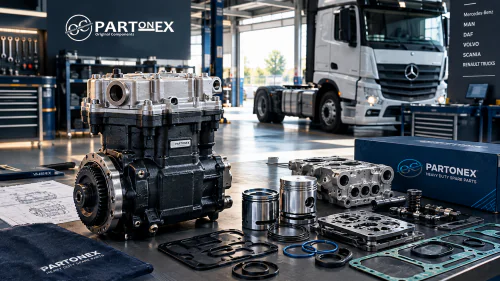
Heavy Vehicle Spare Parts Guide – Partonex Automotive
A clear, practical and non-technical spare parts guide for truck owners and fleet managers. Learn how to choose the right parts, save on maintenance costs, and keep your vehicle safe and efficient.
Owning or managing a heavy vehicle fleet can seem complex — but with the right knowledge, you can increase safety and reduce costs. This guide is written in simple language for drivers, owners, and fleet operators. At Partonex Automotive, our goal is to provide you with the right parts and reliable guidance.
1. Types of parts and their functions
-
Brake pads / discs: Critical for vehicle safety. Replace when worn.
-
Lighting (headlights, tail lights, indicators): Essential for visibility and legal compliance.
-
Mirrors and glass: Ensure visibility and safety.
-
Suspension (air springs, shock absorbers): Improve comfort, load balance, and tire life.
-
Engine parts (filters, pumps, etc.): Affect fuel efficiency and performance.
-
Cooling system (radiator, hoses): Prevent overheating; check for leaks.
-
Drivetrain components (transmission, axles): Transfer power; vibrations or noises may indicate issues.
-
Body and accessories (door, step cover, grille): Add functionality and aesthetic value.
2. What to consider when choosing a part
-
Vehicle information: Brand, model, and production year ensure correct compatibility.
-
OEM vs. aftermarket: OEM (original) parts ensure reliability; aftermarket parts can be cost-effective but quality must be checked.
-
Part number: The safest way to avoid ordering the wrong part.
-
Warranty and return policy: Always review before purchase.
-
Trusted supplier: Choose sellers that provide clear visuals, detailed descriptions, and technical support — Partonex Automotive is your reliable partner.
3. Smart purchasing & saving tips
-
Scheduled maintenance: Prevents minor issues from becoming costly repairs.
-
Fleet discounts: Bulk purchasing lowers per-unit costs.
-
Choose quality aftermarket parts: The cheapest option may cost more in the long run.
-
Watch for seasonal promotions: Prices often vary during maintenance periods.
4. DIY vs. professional service
-
Easy tasks: Bulbs, wipers, filters — manageable for experienced users.
-
Complex tasks: Brakes, gearbox, engine repairs — always use professional service.
-
Warranty coverage: Some parts must be installed by authorized service centers to remain under warranty.
5. Storage and inventory tips
-
Keep dry and clean: Protect from moisture and damage.
-
Keep original packaging: Needed for warranty or returns.
-
Track stock: Keep frequently replaced items easily accessible.
6. Signs that parts need replacement
-
Unusual noises: Knocking, humming, or squealing.
-
Vibrations: Felt in the steering wheel or chassis.
-
Visible wear: Cracks, leaks, or rust.
-
Performance drop: Less power or higher fuel consumption.
-
Warning lights: Never ignore dashboard alerts.
7. Frequently Asked Questions
Do I always need OEM parts?
Not necessarily. Use OEM parts for safety-critical areas; quality aftermarket parts can be good alternatives.
What if I don’t know my part number?
Check your vehicle registration, existing part labels, or provide your vehicle’s brand, model, and year — Partonex Automotive experts can assist.
Can I return a part?
Yes, as long as it’s unused and in original packaging; policies may vary by seller.
8. Conclusion & Call to Action
The right part, at the right time, from a trusted supplier makes all the difference in heavy vehicle maintenance. Partonex Automotive helps you find the right part quickly — just share your vehicle’s brand, model, and year, and we’ll guide you to the perfect fit.