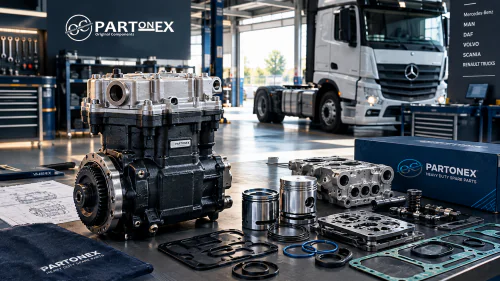
The engine cooling system is one of the most important systems in heavy-duty commercial vehicles. It helps maintain the engine at its correct operating temperature and plays a critical role in engine performance, reliability, and service life. In trucks, tractor units, buses, and other commercial vehicles, a properly functioning cooling system helps protect engine components, maintain operating efficiency, and reduce the risk of unexpected breakdowns.
Cooling system failures can lead to significant repair costs, particularly in long-distance transportation and demanding operating conditions. Components such as radiators, thermostats, water pumps, coolant hoses, expansion tanks, and cooling fans must be inspected regularly to identify potential problems before they become serious.
Partonex focuses on the importance of selecting the right spare parts for heavy-duty commercial vehicles and helping users find relevant product information for their maintenance and repair requirements.
In this comprehensive guide, we explain how heavy-duty engine cooling systems work, explore the main cooling system spare parts, examine common faults and their symptoms, and provide practical advice on correct part selection and preventive maintenance.
What Is an Engine Cooling System and How Does It Work?
An engine cooling system controls the excess heat generated while an engine is running. Internal combustion engines produce high temperatures during fuel combustion. If this heat is not managed properly, it can cause engine overheating, reduced lubrication performance, and potentially severe mechanical damage.
Most heavy-duty commercial vehicles use liquid-based engine cooling systems. Coolant circulates through passages in the engine, absorbs heat, and carries it to the radiator. The radiator transfers heat to the surrounding air, allowing the cooled fluid to return to the engine. Components such as the thermostat, water pump, and cooling fan help regulate this process.
The main functions of an engine cooling system include:
-
Maintaining the engine within the operating temperature range specified by the manufacturer.
-
Reducing the risk of overheating and related mechanical damage.
-
Helping the engine reach its appropriate operating temperature after a cold start.
-
Supporting stable engine operation under different loads and ambient temperatures.
-
Ensuring proper coolant circulation throughout the cooling circuit.
Important: Engine overheating does not always mean the radiator is faulty. The thermostat, water pump, cooling fan, coolant level, hoses, radiator blockage, and system pressure should also be considered during diagnosis.
Main Heavy-Duty Vehicle Cooling System Spare Parts
The efficient operation of an engine cooling system depends on several components working together. When a fault occurs, it is important to inspect not only the component showing symptoms but also other parts that may be contributing to the problem.
1. Radiators and Radiator Components
The radiator is a key component that transfers heat from the engine coolant to the surrounding air. Heated coolant flows into the radiator, where airflow helps reduce its temperature before it returns to the cooling circuit.
Truck and tractor unit radiators operate under demanding conditions, including heavy loads, long operating hours, high ambient temperatures, and exposure to dust and debris. Over time, these conditions can contribute to contamination, blockage, leakage, or physical damage.
Common radiator fault symptoms include:
-
Engine temperature rising above its normal operating range.
-
Coolant leakage from the radiator or its connections.
-
Dirty, blocked, or physically damaged radiator fins.
-
Reduced cooling performance, particularly under heavy loads.
-
Unexplained decreases in coolant level.
When replacing a radiator, it is important to check more than its dimensions and connections. Vehicle model, engine type, production year, and the relevant OEM reference number should also be verified.
2. Thermostats
The thermostat regulates coolant circulation between the engine and radiator according to engine temperature. When the engine is cold, it controls coolant flow to help the engine reach its normal operating temperature. Once the required temperature is reached, it allows circulation through the radiator circuit as designed.
A thermostat stuck open or closed can cause different operating problems.
Common thermostat fault symptoms include:
-
The engine taking too long to reach its normal operating temperature.
-
Engine overheating.
-
Unusual fluctuations in engine temperature.
-
Changes in cabin heating performance.
-
Uneven temperature distribution throughout the cooling circuit.
When selecting a thermostat, its opening temperature and technical specifications must match the vehicle manufacturer's requirements. A thermostat suitable for one commercial vehicle may not be appropriate for another.
3. Water Pumps and Coolant Circulation Pumps
The water pump, also known as the coolant circulation pump, moves coolant through the engine and cooling circuit. If the pump cannot provide sufficient coolant flow, heat transfer from the engine to the radiator may be reduced.
Common water pump fault symptoms include:
-
Engine overheating.
-
Coolant leakage around the pump.
-
Unusual noises coming from the pump.
-
Excessive play or bearing wear.
-
Insufficient coolant circulation.
When replacing a water pump, the gasket surfaces, drive mechanism, connections, and coolant condition should also be inspected. Replacing the pump alone does not necessarily resolve another underlying cooling system fault.
4. Coolant Hoses and Connection Components
Coolant hoses carry fluid between the engine, radiator, and other cooling system components. Exposure to high temperatures, pressure, vibration, and ageing can gradually affect hose condition and performance.
Common coolant hose fault symptoms include:
-
Cracks or swelling on the hose surface.
-
Coolant leakage around connection points.
-
Hoses becoming unusually hard or soft.
-
Leaks around hose clamps.
-
A falling coolant level.
When selecting replacement hoses, consider internal diameter, length, shape, connection design, temperature resistance, and pressure requirements. Hoses that look similar are not necessarily interchangeable.
5. Expansion Tanks and Radiator Caps
The expansion tank accommodates changes in coolant volume as the temperature rises and falls. Depending on the system design, the radiator cap or expansion tank pressure cap also helps regulate cooling system pressure.
A damaged tank or an incorrectly rated pressure cap can contribute to coolant loss and cooling system problems.
The following areas should be inspected:
-
Cracks or deformation in the expansion tank.
-
Damage to the cap or its sealing surfaces.
-
Leaks around hose connections.
-
Problems with level indicators or tank fittings.
-
Compatibility with the pressure rating specified by the manufacturer.
A pressure cap should never be selected solely by its physical dimensions. Its pressure rating must meet the vehicle manufacturer's specifications.
6. Cooling Fans and Fan Clutches
The cooling fan helps move air through the radiator. In systems equipped with a fan clutch, fan operation varies according to the system design and operating conditions.
A faulty fan or fan clutch can reduce cooling performance, particularly at low vehicle speeds, under heavy loads, or in high ambient temperatures.
Potential symptoms include:
-
Engine temperature rising in traffic or at low speeds.
-
The fan failing to engage as required.
-
Unusual fan noise or vibration.
-
Damaged fan blades.
-
Incorrect fan clutch operation.
When diagnosing a cooling fan problem, electric systems should be checked for power supply, sensors, and control circuit faults. Mechanical systems require inspection of their drive components and clutch mechanism.
7. Coolant, Antifreeze, and Auxiliary Components
Antifreeze is not used only to prevent freezing in winter. Coolants formulated for the appropriate application also help protect against corrosion and manage boiling protection according to the manufacturer's specifications.
Using the wrong coolant, mixing incompatible products, or diluting coolant with unsuitable water can reduce its protective performance.
When selecting engine coolant or antifreeze:
-
Check the specifications required by the vehicle and engine manufacturer.
-
Confirm suitability for the relevant heavy-duty diesel engine.
-
Follow the manufacturer's recommended concentration and mixing ratio.
-
Do not mix different coolant technologies unless compatibility has been confirmed.
-
Follow the recommended coolant replacement interval.
Coolant colour alone is not a reliable way to identify its chemical formulation or determine compatibility.
Common Heavy-Duty Engine Cooling System Problems
Cooling system faults may produce obvious symptoms or be confused with other mechanical problems. Correct diagnosis is essential to avoid unnecessary replacement costs and reduce the risk of recurring failures.
Engine Overheating
Engine overheating can have several causes, including low coolant level, a faulty thermostat, water pump problems, radiator blockage, cooling fan failure, air trapped in the system, or pressure-related issues.
If the engine overheats, stop the vehicle in a safe location and follow the manufacturer's instructions. Never open the radiator cap or expansion tank cap while the engine is hot. Pressurised hot coolant can cause serious burns.
If overheating continues or repeatedly occurs, simply adding coolant is not enough. The entire cooling system should be inspected to identify the underlying cause.
Coolant Loss
A falling coolant level may indicate a leak in a hose, radiator, water pump seal, expansion tank, or another connection. In some cases, an internal coolant leak may also need to be investigated.
The absence of a visible leak does not necessarily mean that coolant loss is not occurring. A cooling system pressure test and appropriate engine checks may be required.
Engine Running Colder Than Normal
An engine that takes too long to warm up may have a thermostat stuck open or a problem with the temperature measurement system. Depending on the engine design and operating conditions, consistently low operating temperatures can also affect fuel efficiency, emissions control, and overall performance.
The cause should be verified through appropriate thermostat and sensor checks rather than relying on the temperature gauge alone.
Radiator or Cooling Circuit Blockage
Dirt on radiator fins, internal deposits, and contamination caused by incorrect coolant use can reduce heat transfer. These symptoms can resemble other cooling system faults.
Before deciding whether cleaning or replacement is required, inspect the radiator condition, airflow, coolant circulation, and the overall condition of the system.
Coolant Hose Failure and Sudden Coolant Loss
Worn hoses, excessive system pressure, incorrect installation, and unsuitable replacement parts can lead to sudden coolant loss. For heavy-duty vehicles operating under high loads, this can disrupt transportation schedules and affect operational safety.
Regular hose inspections and the use of correctly specified replacement components help reduce this risk. If a newly installed hose fails again within a short period, system pressure and other underlying causes should also be investigated.
How to Choose the Right Heavy-Duty Cooling System Spare Part
Selecting a replacement part for a commercial vehicle should never depend solely on the product name or appearance. Even vehicles from the same manufacturer and model range may require different parts because of differences in engine type, production year, chassis number, or equipment specification.
Follow these steps when selecting the correct engine cooling system spare part.
1. Check the OEM number.
The original equipment manufacturer (OEM) reference number is an important starting point for identifying the correct part. However, its current application and any replacement or cross-reference numbers should be verified using reliable catalogues.
2. Compare vehicle and engine details.
Check the vehicle make, model, production year, engine code, and chassis number where required.
3. Verify technical dimensions and specifications.
Consider hose diameter, connection design, pump mounting points, thermostat opening temperature, and pressure ratings.
4. Identify the actual cause of the fault.
Diagnose the problem as accurately as possible before ordering parts. For example, engine overheating does not automatically mean that the water pump must be replaced.
5. Review product descriptions and reference information.
Before purchasing, compare the product description, available OEM cross-reference numbers, and vehicle compatibility information.
6. Consider quality and operating conditions.
Heavy-duty vehicle spare parts may operate for long hours under vibration, changing temperatures, and demanding workloads. Product suitability, technical compliance, and a reliable supply source are therefore important.
When researching cooling system spare parts through Partonex, combining the product name, OEM reference number, and vehicle details can make it easier to identify the appropriate component. Final compatibility should always be confirmed against the relevant product information and technical references.
How to Maintain a Heavy-Duty Engine Cooling System
Regular maintenance helps identify developing problems before they lead to serious failures. Maintenance intervals depend on the manufacturer's recommendations, vehicle operating conditions, engine type, and coolant specification.
During heavy-duty vehicle maintenance, the following checks are recommended:
-
Check coolant level and general coolant condition.
-
Inspect the radiator for dirt, mud, and debris restricting airflow.
-
Examine hoses, clamps, and connections for leaks or deterioration.
-
Check the water pump for leakage, unusual noise, or mechanical play.
-
Inspect thermostat, cooling fan, and fan clutch operation.
-
Check the expansion tank and pressure cap for correct condition and specification.
-
Follow the recommended coolant replacement interval and mixing ratio.
-
Where necessary, carry out a pressure test and bleed the system according to the manufacturer's procedure.
Safety warning: Cooling systems can contain hot, pressurised fluid. Inspection, coolant filling, and maintenance must follow the manufacturer's safety instructions. Keep clear of moving components, particularly where the cooling fan can start automatically.
Do Cooling System Faults Affect Fuel Consumption and Engine Life?
A properly functioning cooling system helps the engine operate within its designed temperature range. Overheating can reduce lubrication performance and damage gaskets, seals, and metal components, potentially resulting in major engine repairs.
Running at temperatures that are consistently too low can also affect efficiency and emissions control, depending on the engine design and operating conditions.
Cooling system maintenance is therefore important not only for preventing overheating but also for supporting engine reliability and vehicle uptime.
A planned maintenance schedule is particularly beneficial for long-haul trucks, tractor units, commercial fleets, and heavy-duty vehicles that operate under demanding loads.
Partonex: Heavy-Duty Vehicle Cooling System Spare Parts
Selecting the right spare parts is an essential part of maintaining and repairing heavy-duty commercial vehicles. Vehicle compatibility, technical specifications, and reference numbers are fundamental considerations when choosing cooling system components.
Partonex aims to help users research heavy-duty vehicle spare parts and evaluate relevant product information as part of the component selection process.
When looking for radiators, thermostats, water pumps, coolant hoses, expansion tanks, and related components, consider the following information:
-
Vehicle make and model.
-
Engine type and production year.
-
OEM or equivalent reference number.
-
Product technical specifications.
-
Manufacturer-recommended installation and operating requirements.
Where relevant products are available in the Partonex catalogue, their descriptions and compatibility information can help with the selection process. Never order a component based solely on visual similarity without verifying its suitability for the intended vehicle.
Frequently Asked Questions
What components make up an engine cooling system?
A typical engine cooling system includes a radiator, water pump or coolant circulation pump, thermostat, coolant hoses, expansion tank, pressure cap, cooling fan, and related auxiliary components. The exact configuration depends on the vehicle and engine design.
Why does a heavy-duty vehicle engine overheat?
Possible causes include low coolant level, radiator blockage, thermostat failure, water pump problems, cooling fan faults, air trapped in the system, and pressure-related issues. The exact cause must be identified through appropriate diagnostic checks.
How can you identify a faulty water pump?
Potential symptoms include coolant leakage around the pump, unusual noise, excessive mechanical play, and engine overheating. These symptoms are not conclusive on their own, so further inspection may be necessary.
Why does engine coolant keep disappearing?
Coolant loss may result from leaks in hoses, the radiator, pump seals, the expansion tank, or other connections. If no external leak is visible, additional diagnostic checks may be required.
How do you choose antifreeze for a heavy-duty vehicle?
Select coolant according to the specifications required by the vehicle and engine manufacturer. Colour alone is not sufficient to determine compatibility. The mixing ratio and replacement interval should follow the manufacturer's instructions.
Can cooling system spare parts be identified by OEM number?
An OEM number is a useful reference when searching for the correct spare part. However, the reference, any updated replacement number, and the vehicle application should be verified using reliable technical catalogues.
When should cooling system components be replaced?
Replacement intervals depend on the component, its condition, the manufacturer's maintenance schedule, operating conditions, and any diagnosed faults. Damaged, leaking, or unsuitable components should be replaced using the correct procedures.
Conclusion: Correct Parts and Regular Maintenance for Reliable Cooling Performance
The engine cooling system is essential to the reliability and long-term performance of heavy-duty commercial vehicles. Components such as radiators, thermostats, water pumps, coolant hoses, expansion tanks, and cooling fans work together to help maintain the correct engine operating temperature.
Identifying faults early, following manufacturer-recommended maintenance procedures, and selecting compatible spare parts can help reduce unnecessary costs and the risk of unexpected breakdowns.
When researching heavy-duty cooling system components, engine cooling system spare parts, or replacement parts by OEM number, access to accurate technical information is essential.
Explore heavy-duty vehicle spare parts with Partonex and evaluate product references, technical specifications, and vehicle compatibility before making your selection. Correct component selection and regular maintenance are key steps towards supporting reliable cooling system performance.
heavy-duty cooling system, engine cooling system, heavy-duty truck spare parts, truck cooling system parts.
adiator, thermostat, water pump, coolant circulation pump, coolant hose, expansion tank, radiator cap, engine antifreeze, cooling fan.
engine overheating causes, radiator failure symptoms, water pump failure symptoms, coolant loss, faulty thermostat symptoms.
heavy-duty truck parts supplier, OEM spare parts, truck cooling system spare parts, commercial vehicle replacement parts, Partonex.